
#12 - The Zeigarnik effect
The probable reason you don't sleep at night
What is leadership, at its core, if not making decisions?
Whether you run a team of three or a company of a thousand, whether you’re a founder negotiating with your co-founder or a manager navigating competing priorities - your job is to cut through the noise and move things forward.
The more responsibility you take on, the more decisions land on your desk - and the higher the stakes of each one. Your brain becomes your most critical business asset. It’s your sharpest tool in every strategy session, every crisis, every moment when people are waiting for you to decide.
The problem is, your brain wasn’t built for this.

It was built to never let go of what’s unfinished
An open task, a deferred decision, an unresolved conflict... Your brain keeps them in active memory, like open tabs consuming RAM in the background. And the more you accumulate these open loops, the thicker your mental fog becomes.
Ben Horowitz, co-founder of Andreessen Horowitz, describes in The Hard Thing About Hard Things how he accumulated what he calls “management debt.”
His favorite story? Two brilliant engineers, one CTO slot. Quick fix: put them both in the role. Problem deferred.
Except the problem never left his head.
Every morning, that unmade decision came back. Choose one, disappoint the other. He knew he had to pick. Just not today. Tomorrow. Next week. After the fundraise.
Meanwhile, his brain kept that loop open in active memory. Along with all the others. The employee who needed a hard conversation. The product strategy that needed revisiting. The conflict between two managers. Every deferred decision added another open tab.
The result? Permanent mental fog. Horowitz admits it himself:
By far the most difficult skill I learned as CEO was the ability to manage my own psychology... The first rule of the CEO psychological meltdown is don’t talk about the psychological meltdown.
And when he finally made the call on those two engineers, the cost was ten times higher than it would have been at the start.
Horowitz isn’t a bad CEO.
He’s not weak, not a procrastinator, not incompetent.
He’s human.
His brain is doing exactly what it was programmed to do: keep in active memory everything that isn’t resolved. It’s a survival mechanism. On the savannah, forgetting an unneutralized threat could get you killed. Your brain learned never to release an open danger.
You know this moment. 11pm. Your body is exhausted. But your mind refuses to disconnect. It replays the afternoon meeting on loop. What you should have said to your co-founder. That decision you’ve been pushing back for two weeks.
Your brain hates uncertainty. It’s biological.
Your limbic system activates survival mode. Impossible to let go. It replays scenes hoping for a different ending. The “staircase wit” you know so well? It’s trying to close loops that stayed open. And the more you want it to stop ruminating, the more excited it gets.
Your brain isn’t a coffee machine - there’s no off switch. If you don’t give it a clear signal that the day is over, it stays in active standby. That’s what’s called the “default mode network” - a network that keeps churning when you’d like to stop thinking entirely.
This mode has a purpose: helping you make unconscious connections. It’s where you synthesize your learnings, where you create without realizing it. But if your head is already full of half-digested decisions, it has no bandwidth left for insight.
Just noise.
The Zeigarnik effect - what is it, exactly?
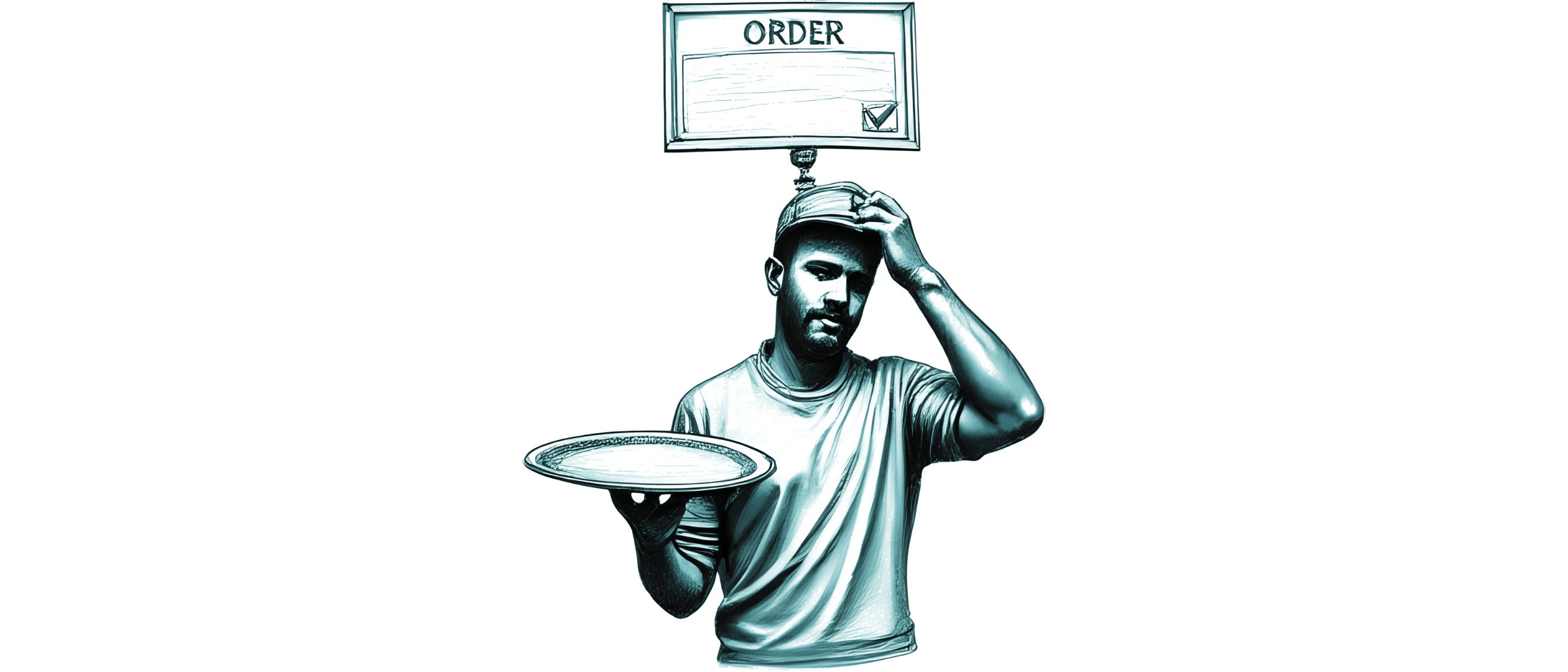
In 1927, psychologist Bluma Zeigarnik notices something strange in a Berlin café. The waiter memorizes dozens of complex orders perfectly without writing anything down. Impressive. But when Zeigarnik comes back for a forgotten scarf, the same waiter doesn’t recognize her at all. He can’t even remember where she was sitting.
“I keep orders in my head until they’re served,” he explains.
Intrigued, Zeigarnik runs a study on 164 subjects. She has them complete a series of tasks, interrupting half of them before they’re finished. Result: adults remember unfinished tasks 90% better than completed ones.
She gave her name to the phenomenon: the Zeigarnik effect. It’s the brain’s tendency to better retain unfinished tasks than finished ones. An open loop creates a cognitive tension that keeps information in active memory until it’s resolved.
How does it work?
Your lazy brain looks to conserve energy. When a task is done, it files it and moves on. But when it stays open, your brain creates a psychological tension that keeps the information accessible. It’s your internal alert system: “Attention - not done yet, stay alert.”
The problem is that your brain can’t distinguish between “reply to that candidate’s email” and “decide whether to fire your head of sales.” For it, an open loop is an open loop. And it will keep it active until you close it.
When you’re a leader...
You’re the last link in the chain. Every pending decision stays open because nobody can make it for you. A manager can “transfer” a loop mentally while waiting for your sign-off. “I’ve done my part, it’s in the boss’s hands now.” Their loop closes, at least partially.
You don’t have that escape.
On top of that, you have nobody to verbalize to. When you express a problem to someone you trust, your brain sometimes considers the loop “in progress” elsewhere - a form of cognitive offloading. Simply saying “I don’t know what to do about this difficult client” to a peer lightens the tension.
Without a peer at your level, without a sparring partner, every task stays 100% on your mental shoulders.
And the worst part? You’re accumulating open loops on all fronts simultaneously. Finance, HR, product, clients, strategy. The Zeigarnik effect applies to each of them at the same time. The Berlin waiter had, at most, a couple dozen orders in his head. You have dozens of strategic decisions, each with their own ramifications. And it never stops.
Your mental fog isn’t a bug. It’s the accumulation of dozens of open loops squatting your cognitive bandwidth without a break.
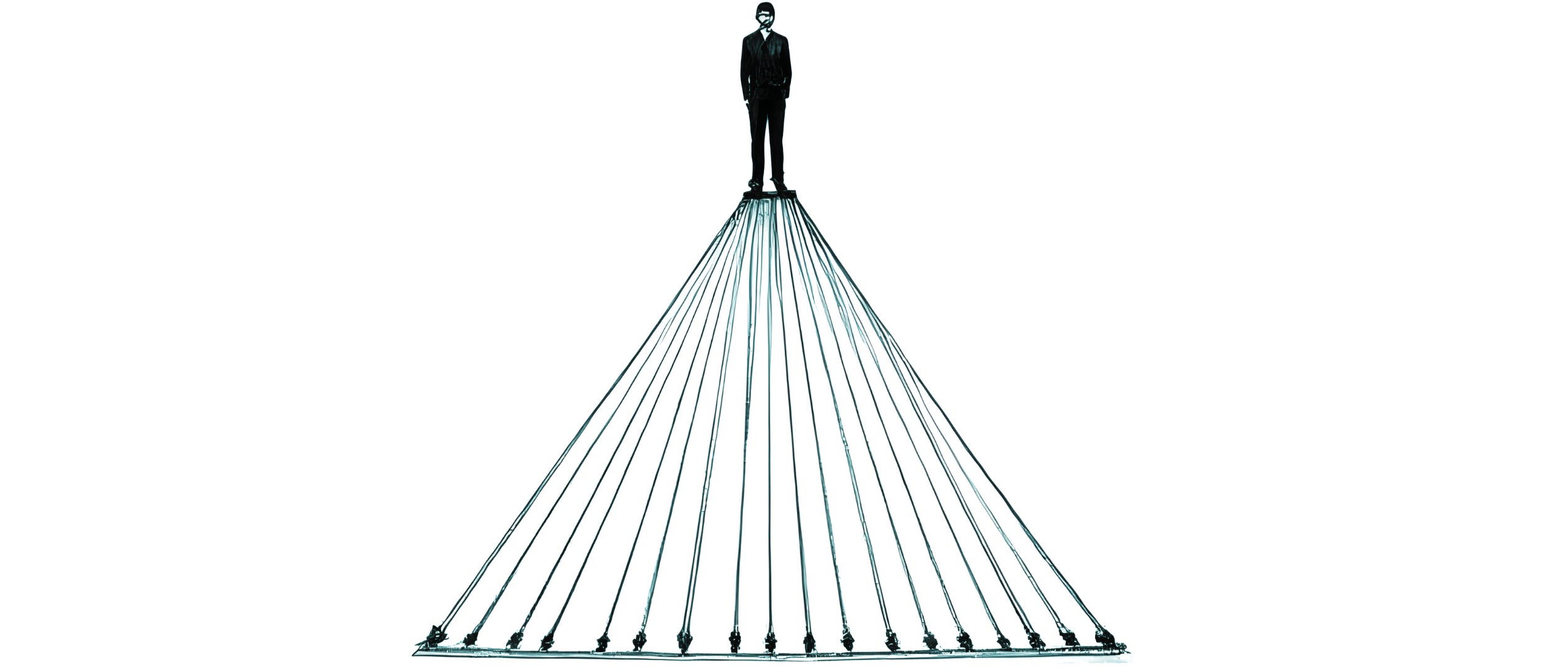
What I observe
In my sessions with leaders facing this kind of situation, I never start with “Make a to-do list” or “Use the GTD method.” (For Getting Things Done - it can help the less organized, sure. But that’s rarely the real problem.)
I try to understand what’s open in their head. And why. Because often, the loops that take up the most mental space aren’t the most urgent ones. They’re the ones being avoided.
The difficult conversation with the co-founder. The decision to shut down a product line. The tough conversation with a long-tenured employee. These topics never appear at the top of a to-do list. They linger somewhere in a corner of the calendar - or the mind - deferred week after week with very rational justifications.
What emerges is a consistent pattern: they describe a manageable to-do list, a calendar that seems under control, processes in place. On paper, everything is rolling. Priorities are clear, deadlines are met, meetings are productive. But when I ask “what wakes you up at 3am?”, the answer is never on their to-do list.
It’s always something else. Something vague. A low-grade tension. A subject they can’t quite articulate.
The “aha” moment comes when I point out: “You talked to me about your product strategy for 20 minutes. You detailed the features, the roadmap, the client feedback. But you didn’t mention once this conversation you need to have with your CTO. And yet it’s the third time in two sessions you’ve brought it up in passing, like it’s a detail.”
Then silence. Then: “Yeah, you’re right, we should talk about that.”
The real open loops hide. They disguise themselves as “not a priority this week” or “waiting for the right moment” or “it’s complicated, there’s a lot of context.” Your brain keeps them running in the background, burning energy to hold them in memory, while you refuse to look at them directly. Because looking at them means having to act.
Verbalizing these loops to someone isn’t the same as ruminating alone. When you put them into words out loud, they take a concrete form. They become real problems with possible solutions, not ghosts haunting your nights.
The conversation makes it possible to name them precisely, size them objectively, and above all decide consciously what to do with them. Do you close the loop now by making the decision? Do you schedule it with a specific date? Or do you deliberately drop it because it turns out it wasn’t that important?
Simply choosing consciously closes the loop. Even if you decide it ultimately doesn’t matter. But for real.
How to take back control
1. The open loop audit
Take 30 minutes and a notebook. Write down absolutely everything running through your head. Not just tasks to do - decisions to make, conversations to have, problems to solve, ideas to explore. Empty your brain onto paper, without filtering or organizing. On paper, I said. In longhand if you can.
You’ll probably pass 50 items. That’s normal. That’s your real mental inventory.
The exercise works, but when we do it together I can push on the zones you’re avoiding. “You listed 47 things, but you didn’t mention your relationship with your co-founder. And yet, last time, you told me that was weighing on you.” The most costly loops are often the ones you “forget” to write down.
2. The two-minute rule (or just do it now)
If a task takes less than two minutes, do it immediately. That closes the loop. A confirmation email, a quick call, a simple approval. Each micro-loop closed frees up bandwidth. And that’s already something.
Of course, this rule only applies to small tasks. The real loops draining your energy - the ones involving strategic decisions or difficult conversations - never take two minutes. They require reflection, courage, sometimes a structured framework to approach them calmly.
3. The daily brain dump
Every evening before leaving the office, write down the three most important open loops. Not the most urgent - the most important. The ones that, if they stayed open for another three months, would cost you the most.
The goal isn’t to solve them. It’s to name them. Your brain now knows you’ve seen them, you acknowledge them. That reduces the cognitive tension.
In my sessions with leaders, we push this exercise further. We examine why these three loops are still open. What’s really blocking you? Fear of conflict? Lack of information? Emotional attachment to a past decision? Identifying the blockage is often more important than solving the problem.
4. The decompression ritual
You need a clear signal that tells your brain your workday is over. Not just closing your laptop. A real ritual.
It could be a walk without your phone before heading home. A routine manual activity like cooking or tidying up. A moment where you note the decisions you made today and those deferred to tomorrow. Or even a phrase you repeat to yourself: “I’m no longer useful to my business for the next eight hours.”
Any signal that clearly tells your limbic system the danger has passed and it can stand down.
The problem is that when your open loops involve existential stakes for your company, your brain doesn’t let go so easily. It knows the danger hasn’t really passed. And that’s when you need someone to help you turn those vague threats into concrete problems with action plans.
5. The non-decision decision
Sometimes the best way to close a loop is to consciously decide not to decide. But truly consciously.
“I’m choosing not to resolve this problem before January because I need more data.” There. The loop is closed. You’ve made a decision about the decision. Your brain can let go.
The nuance is subtle but crucial. Deferring a decision without owning it keeps the loop open. Deciding to defer with a specific date and a clear reason closes it.
When we work together, I challenge you on your non-decisions. “You say you’re waiting for more data. What data, exactly? And if you never get it, what do you decide?” Often, the real reason for the deferral isn’t lack of information. It’s the discomfort of choosing.
6. The weekly cleanup
Once a week, review your list of open loops. For each one, ask yourself: does this loop still deserve space in my head?
Some loops have closed on their own. Others have become obsolete. Others turned out to be less important than you thought. Deliberately remove them from your list.
It’s an act of mental hygiene. Like emptying your email trash - but for your brain.
My tips
The “mental parking lot” technique
When an intrusive thought shows up in the middle of a meeting or while you’re deep in something important, don’t chase it away. Note it immediately in a dedicated notebook. A word, a phrase, just enough that your brain knows it won’t be forgotten.
It’s like dropping a pin where you parked your car. You know where it is, you can come back to it later. Your brain lets go.
The Sunday evening question
Before starting your week, ask yourself: “What is THE loop I’m going to close this week, no matter what?”
One. Not three. Not five. One.
Choose the one that will free up the most mental space. Maybe it’s the most important one. Maybe it’s the one that’s been dragging the longest. Maybe it’s the one keeping you up at night.
And in a session with a Sparring Partner, you can go further: understanding why that particular loop weighs on you so much, and what has really been stopping you from closing it all this time.

This week’s challenge
Tonight, before you go to sleep, take five minutes. Write down the three open loops taking up the most space in your head right now.
Not the urgent tasks. The loops. The things that keep coming back. The decisions you keep pushing. The conversations you keep avoiding.
For each one, write one sentence: “I choose to [close it / schedule it / drop it] because [reason].”
If you can’t complete that sentence for one of them, it probably deserves a conversation with someone who can challenge you on it. You know where to find me.
You don’t have to resolve everything this week. But you owe it to yourself - to yourself, nobody else - to consciously choose what you do with each one.
The Zeigarnik effect is human
Your brain is doing exactly what it was programmed to do: never let go of what’s unfinished.
And as a leader, you don’t have to face it alone.
Because the more isolated you are at the top, the more loops accumulate without anyone to help you sort them, name them, or close them. It takes a bit of method. And above all, an outside perspective that can see the loops you refuse to look at.
Ready to take action? Book your discovery call: https://bit.ly/LBkBrief
Next week, I’ll tell you how you make strategic decisions based on what everyone else is doing - and why following the herd is rarely the right direction for your business.